PDK Leaks
There are a number of locations where leaks can occur on the 7 speed PDK. Below are images and descriptions of the most common.
I haven’t shown an image, but leaks can develop around the black pan at the base of the transmission. This can be corrected by pan replacement. I’ve had numerous reports from people who complain of leaks after replacing the black plastic pan with an aftermarket aluminium pan.
Pan leaks
The image of the top of a transmission shows the two transmission vents. These are there to allow for expansion/contraction of the air inside during temperature changes.
There is really nothing that can be done about these leaks apart from installing some type of aftermarket device that will catch the fluid. It is unusual to have leaks from here when street driving. But track drivers do report leaks from these locations sometimes.
Note the image is of a 981 transmission. Other transmission variants may have the vents in a different location.
Vent leaks
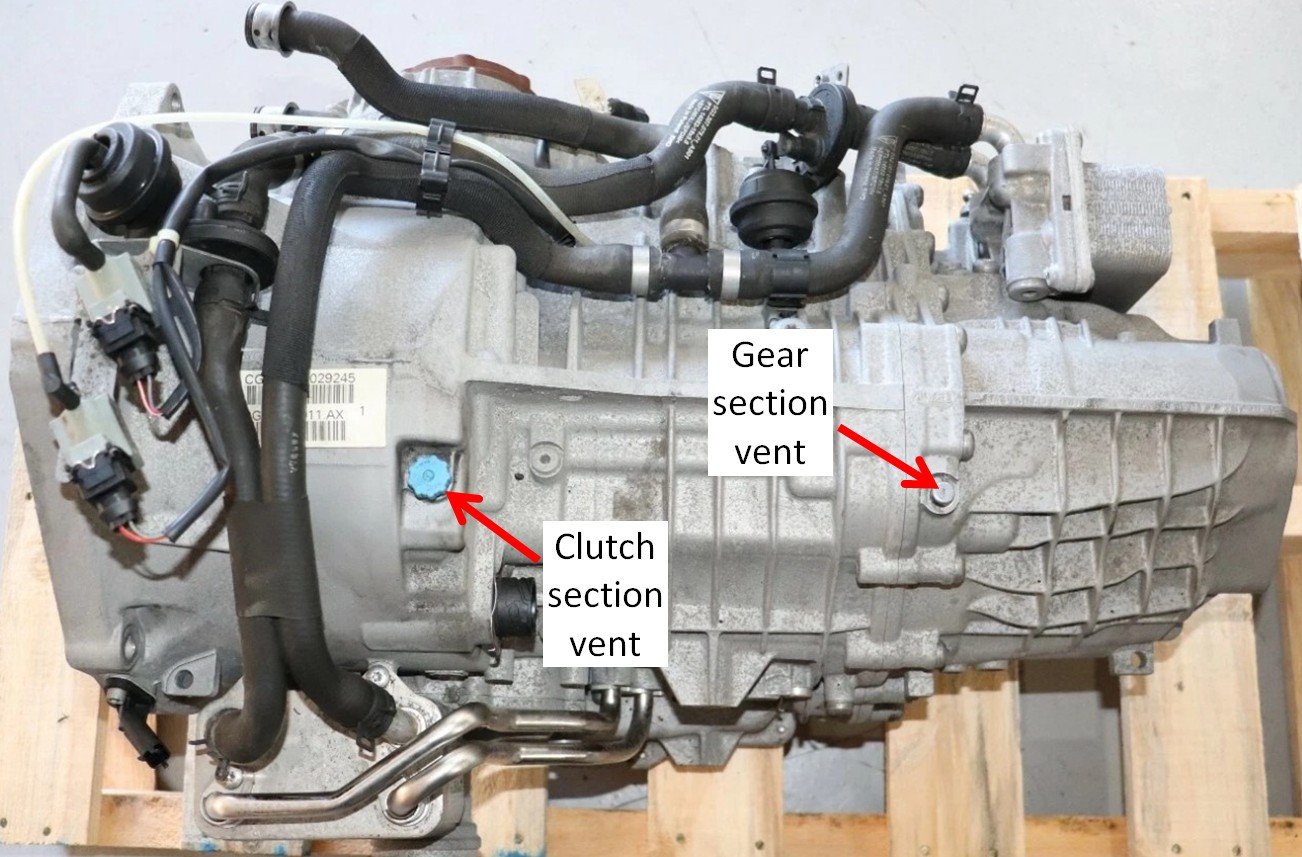
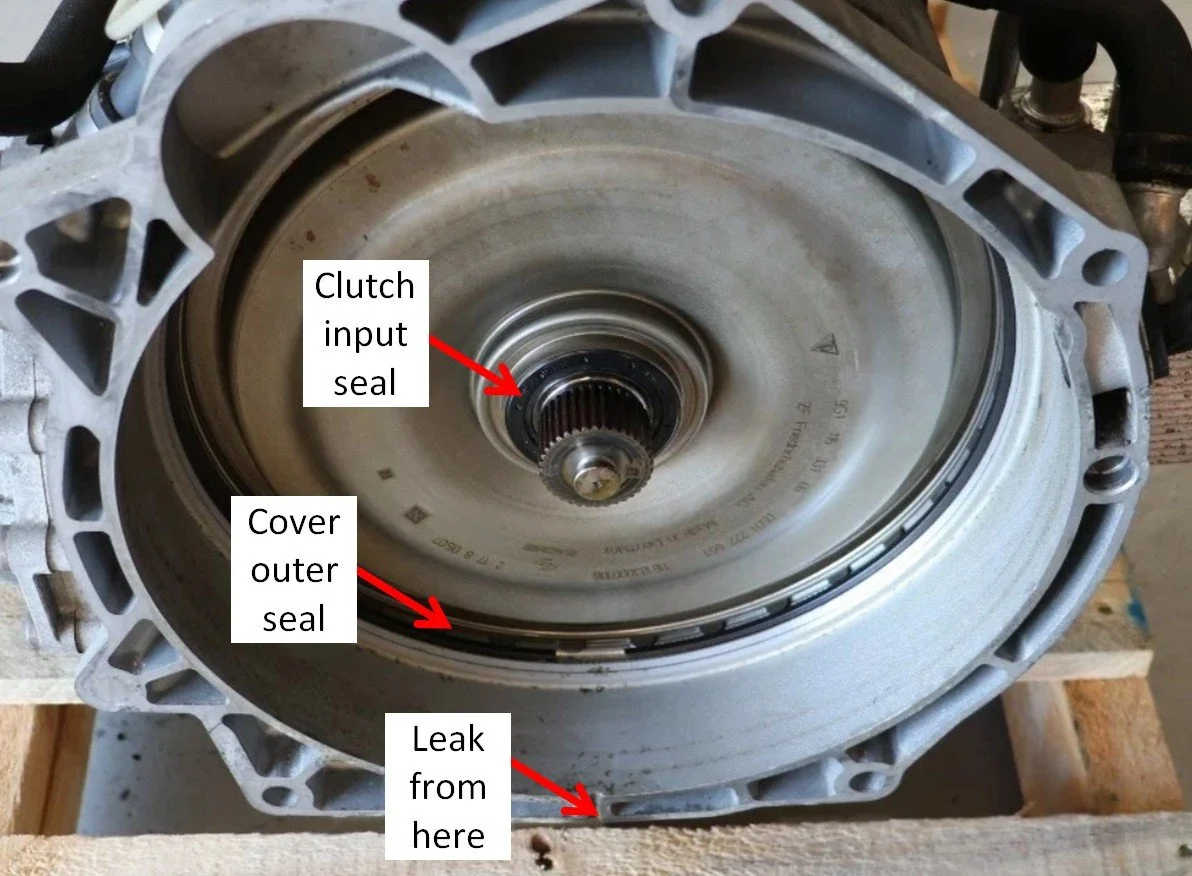
Image of the transmission removed from the car shows where leaks can occur from the 6 O’clock position on the bell housing. These can come from the outer seal on the clutch cover, but most likely from the clutch input seal. This often occurs due to a failing dual mass flywheel (DMF), which in turn shakes the clutch pack and creates the leak.
Front cover leaks
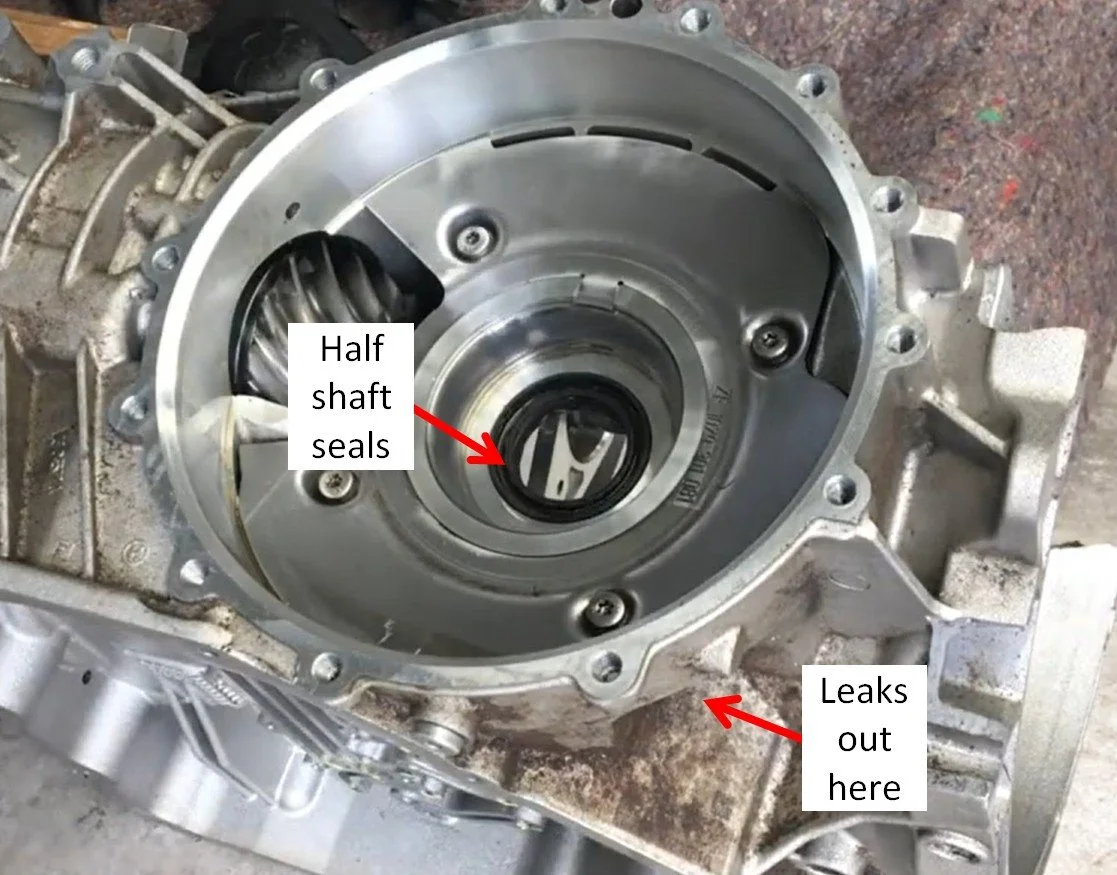
On the half shafts located behind the differential there is a double seal that separates the clutch and gear section fluids in this location. The image shows the location of the seals and where leaks will occur from the weep hole below the bell housing.
I’ve provided a video that shows an explanation of the seals being replaced.
Note that displacement of the seals is commonplace when the rear wheels take a hit during an accident. This occurs regularly during track operations. Not ensuring these seals are located correctly is a common cause of gear/clutch fluid mixing, which can cause many issues afterwards.
Half shaft seal leaks
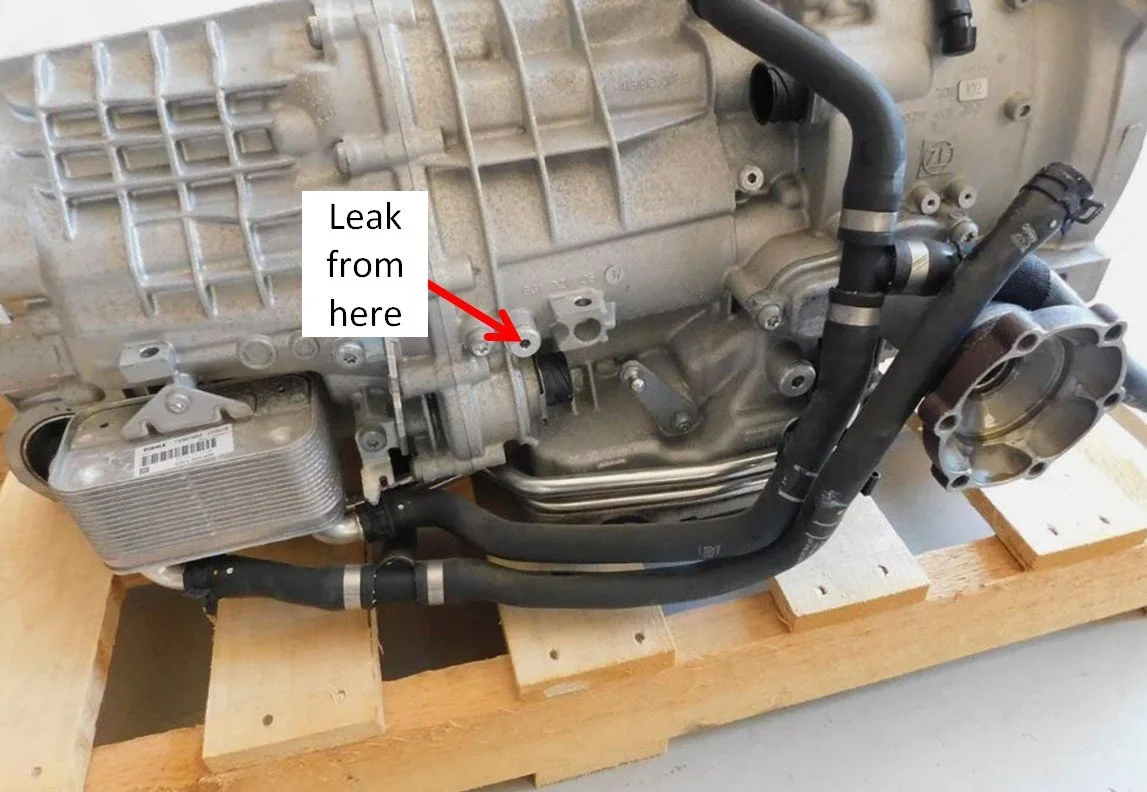
There is a set of double seals on the input shafts that are right in the middle of the transmission. These seals separate the two fluid types in this area. The leak comes from the hex plug on the side of the transmission as shown in the image. This image shows the plug on a 911 transmission. The Boxster/Cayman transmission has this plug on the other side.
Fixing this leak is very difficult and requires a complete disassembly of the transmission and gearset. Jay Lawlor at Speed Density Motorsports is the one person I know of with the skills, tools and knowledge for this task. Many transmissions are shipped to him to correct the leak.
Jay has developed the seals himself (they aren’t available from Porsche). He also developed his own in-house tools to fully disassemble the transmission so the seals can be replaced. The video linked is him showing the seals, their location in the transmission and how the weep plug works.
Internal double seal leaks
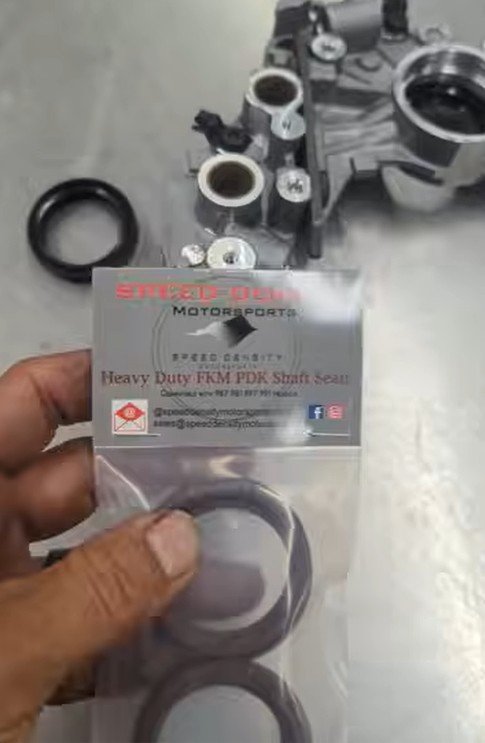
Video showing input shaft double seals and associated hardware.
Input shaft seal leaks
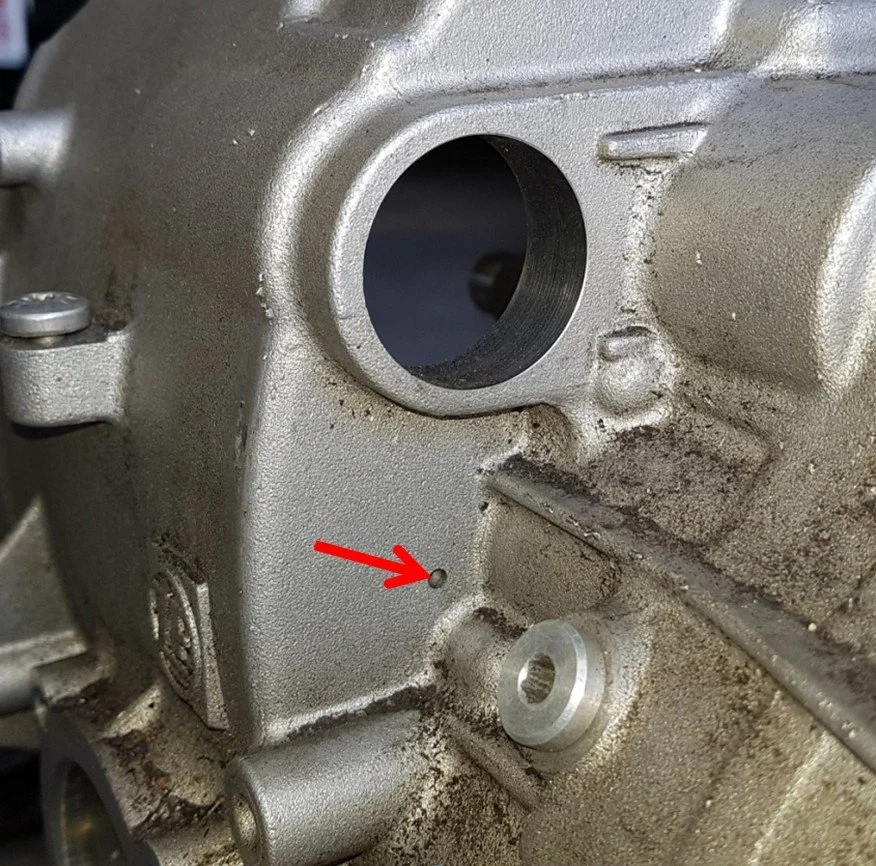
There are some seals on the outer input shaft that can leak and are observed from the small hole below the upper electrical plug. Red arrow in image on right.
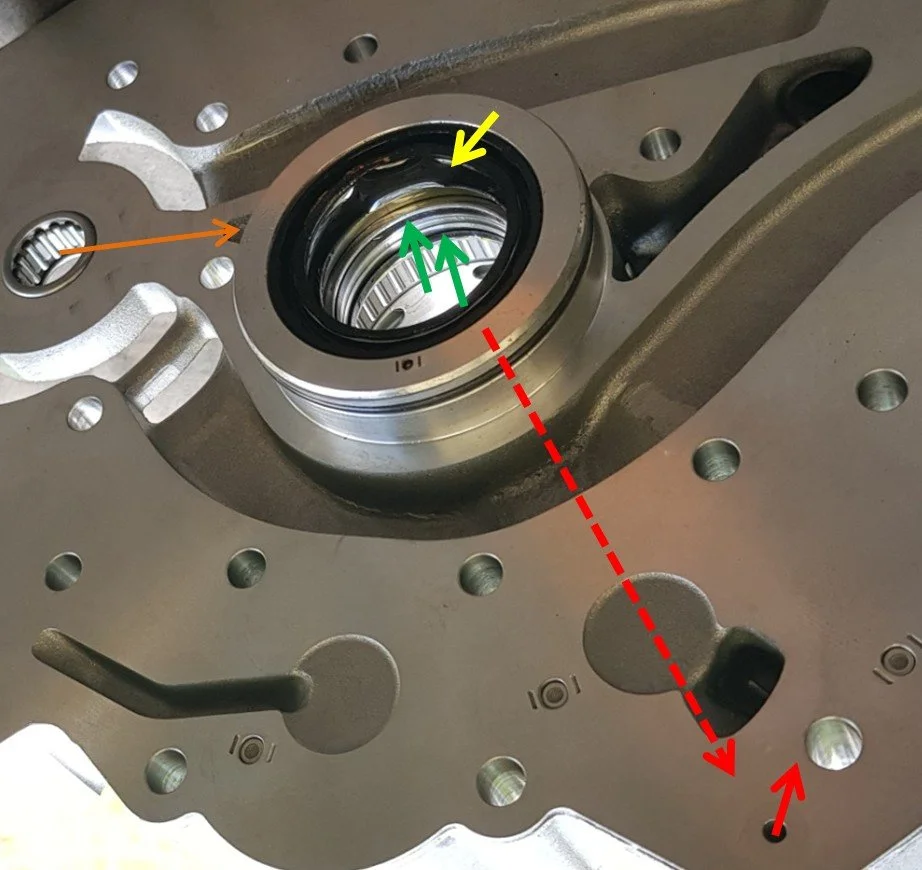
In the image below left you can see there is a rubber seal (yellow arrow) and two hard seals (green arrows) in the intermediate plate. If there is a leak in the gap between the rubber seal and the hard seals the fluid will move via an internal passage in the intermediate plate (dashed red line) to a outlet hole (solid red arrow) which then goes to the external weep hole where the leak is observed.
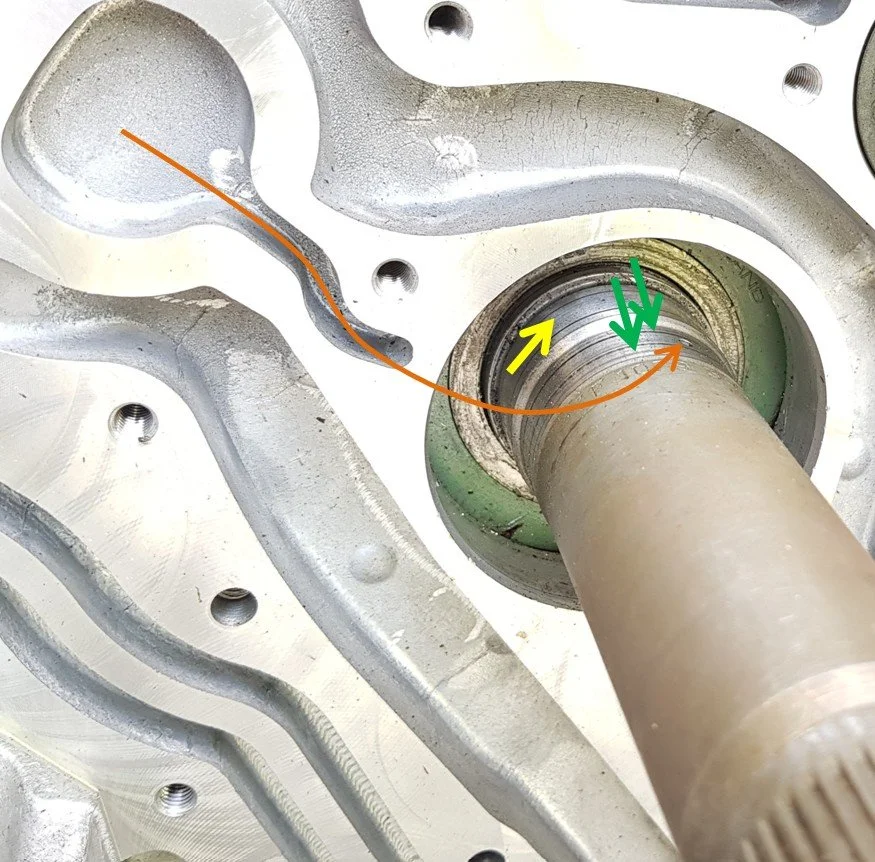
In the image lower right you can see where the seals are located relative to the input shaft. Green arrows show wear marks of the hard seals, and yellow the rubber seal.
Of note, the brown arrows below show the path of the clutch fluid from the rear of the pump bearings to the small hole between the two hard seals. This in turn lubricates the bearings between the two input shafts.